Release time: December 15, 2025
Views: 2892

Cooling technology serves as a critical foundation for modern industry and daily life, where the choice of technical pathway directly impacts system efficiency, cost, and sustainability. Thermoelectric cooling (TEC) and compressor-based refrigeration (vapor-compression refrigeration), as two mainstream solutions, exhibit significant differences in technical principles, application scenarios, and market positioning. This article by Huajing Temperature Control will systematically outline the core characteristics of both technologies based on thermodynamic theory, engineering practice, and industry data, aiming to provide objective reference for customer technical selection.
I. Comparison of Technical Principles and System Composition A. Thermoelectric Cooling Technology
· Working Principle:Based on the Peltier Effect, it uses direct current to drive charge carrier migration at the interface between P-type and N-type semiconductor materials, achieving directional heat transfer.
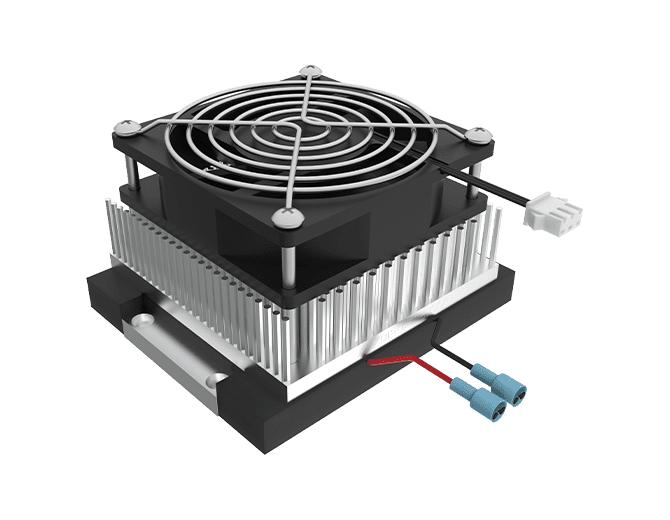
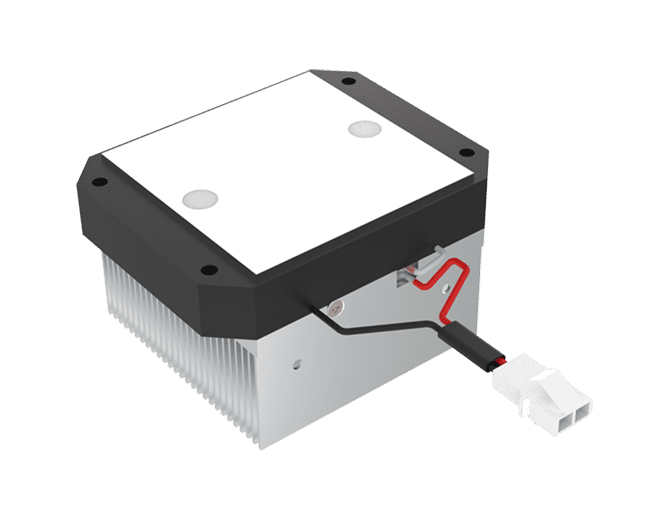
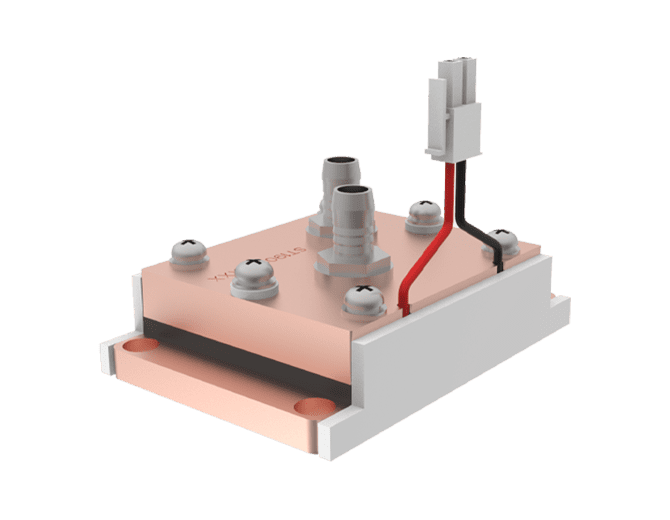
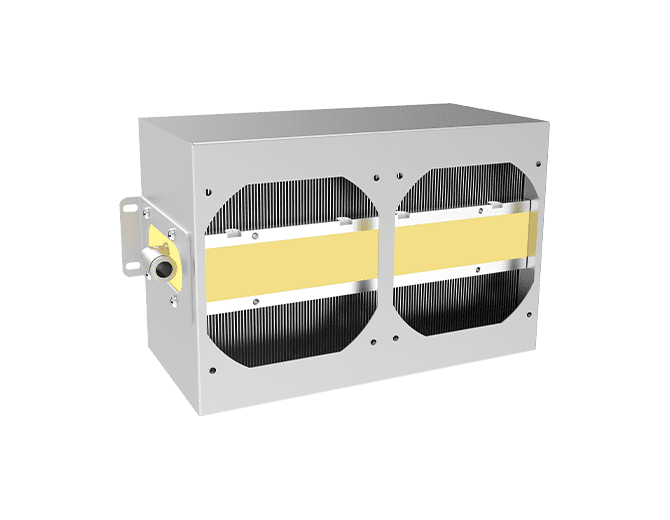
· System Components:Consists of thermoelectric modules (TECs), heat sinks, a power supply, and a control system. It contains no moving mechanical parts.
· Key Parameters:Cooling efficiency is determined by the Figure of Merit (ZT value). Currently, commercial Bi₂Te₃ materials have a ZT value of about 1.0-1.2.
B. Compressor-based Refrigeration Technology
· Working Principle:Relies on the vapor-compression cycle. A compressor drives the refrigerant to undergo phase changes cyclically between the evaporator (heat absorption) and condenser (heat rejection), facilitating heat transfer.
· System Components:Includes four core components: compressor, expansion valve, evaporator, and condenser. It depends on mechanical operation and fluid dynamics design.
· Key Parameters:The Coefficient of Performance (COP) is typically 2.0-4.0, significantly influenced by the refrigerant type and operating conditions.
II. Comparative Analysis of Performance Parameters A. Energy Efficiency
· Compressor-based Refrigeration:Under standard conditions (ambient temperature 25°C, target temperature -20°C), COP values can exceed 3.0. It is suitable for applications requiring large temperature differentials and high cooling loads.
· Thermoelectric Cooling:COP values are typically 0.3-1.2. Efficiency is relatively higher when the temperature differential (ΔT) is ≤ 30°C but decreases exponentially as the temperature difference increases.
· Conclusion:Compressor-based refrigeration holds a significant energy efficiency advantage for large-scale cooling demands, while thermoelectric cooling is more suitable for scenarios with small temperature differentials and intermittent operation.
B. Temperature Control Precision
· Thermoelectric Cooling:By adjusting the current, temperature control precision of up to ±0.1°C can be achieved, with a response time of <1 second. It supports bidirectional temperature control (switching between cooling and heating).
· Compressor-based Refrigeration:Limited by mechanical inertia, temperature control precision is typically around ±1°C, with a response time of approximately 3-5 minutes. Direct switching between cooling and heating modes is not possible.
· Conclusion: Thermoelectric cooling is the preferred choice for scenarios requiring high precision, such as precision instruments and medical equipment.
C. Environmental Adaptability
· Thermoelectric Cooling:No risk of refrigerant leakage. It can operate stably in extreme environments like vacuum and high altitudes, offering excellent vibration resistance (used by NASA on space stations).
· Compressor-based Refrigeration:Relies on refrigerant phase change. Efficiency decreases significantly in low-temperature environments (COP can degrade by 40% at -30°C), and there is a potential risk of refrigerant leakage.
· Conclusion: Semiconductor-based solutions are preferred for special environments (e.g., aerospace, deep-sea equipment).
III. Assessment of Environmental Impact and Sustainability A. Environmental Impact of Refrigerants
· Compressor-based Refrigeration:Traditional refrigerants (e.g., R22, R410A) have a high Global Warming Potential (GWP, up to 2088) and are strictly regulated by the Montreal Protocol. New low-GWP refrigerants (R32, CO₂) still pose risks like flammability or the need for high-pressure operation.
· Thermoelectric Cooling: Uses no refrigerants, resulting in no direct greenhouse gas emissions, and complies with regulations like the EU F-gas directive.
B. Carbon Footprint from Energy Consumption
· Compressor-based Refrigeration:High energy efficiency can reduce electricity consumption per unit of cooling. However, indirect carbon emissions remain high if coal-based electricity is used.
· Thermoelectric Cooling:Lower energy efficiency leads to higher electricity consumption per unit of cooling. Achieving carbon neutrality requires coupling with clean energy sources (e.g., photovoltaic power supply).
IV. Suitability for Application Scenarios A. Areas Where Thermoelectric Cooling Excels
· Miniaturized Devices:Car refrigerators (capacity < 50L), CPU coolers, laser temperature control.
· High-Precision Requirements:PCR instruments (±0.1°C control), infrared detector cooling.
· Special Environments:Space station equipment, downhole instrument cabinets.
B. Areas Where Compressor-based Refrigeration Excels
· Large-Scale Cooling:Household refrigerators (>200L capacity), commercial cold storage, central air conditioning.
· High Temperature Differential Needs:Quick-freezing equipment (target temperature < -40°C), industrial chillers/dryers.
· Continuous Operation Scenarios:Cold chain logistics, data center cooling.
V. Outlook on Technology Development Trends A. Directions for Thermoelectric Cooling
· Material Innovation: Topological insulators, nanocomposite thermoelectric materials (with ZT values potentially exceeding 2.0) could increase COP values above 1.5.
· System Integration: Combining with Phase Change Materials (PCMs) and heat pipe technology to mitigate efficiency degradation of TEC modules under high-load operation.
B. Directions for Compressor-based Refrigeration
· Refrigerant Alternatives:Commercialization of green technologies like CO₂ transcritical cycles and magnetic refrigeration.
· Intelligent Control:Integration of inverter compressors with AI algorithms for dynamic energy efficiency optimization.
Conclusion Thermoelectric cooling and compressor-based refrigeration are not simply superior or inferior substitutes for one another; they are complementary technological pathways.
· Choose Thermoelectric Cooling when the application's core requirements are miniaturization, high precision, or operation in special environments.
· Choose Compressor-based Refrigeration
· when the scenario demands high cooling capacity, high energy efficiency, or ultra-low temperatures.
About Huajing Co., Ltd
Huajing Co., Ltd. is a National High-Tech Enterprise specializing in temperature control equipment solutions, integrating R&D, production, sales, and service. The company focuses on three main areas: thermoelectric cooling technology, vapor-compression refrigeration technology, and the application of flexible thermally conductive heating film technology. It provides customers with comprehensive solutions encompassing 3D structural design, CAE thermal simulation analysis, and supporting electronic hardware/software.
Its products are widely used in various industries, including medical equipment, beauty devices, laser equipment, communications/power, aerospace, and automotive/new energy. Huajing Temperature Control currently holds multiple patents and has passed certifications for the ISO9001 and IATF 16949 quality management systems.
The company is committed to providing customers with high-performance, highly stable, and highly reliable thermal management solutions and products. With breakthroughs in material science and system design, thermoelectric cooling and compressor-based refrigeration will develop more refined and collaborative application models across an even wider range of fields.
 Contact Our Thermal Experts:
📞 +86 18575222950 (WeChat/WhatApps)
📧 EMAIL: sale02@hj-tc.com
🌐 Browse products: https://www.huajingtc.com (Huajing Cooling Solutions)
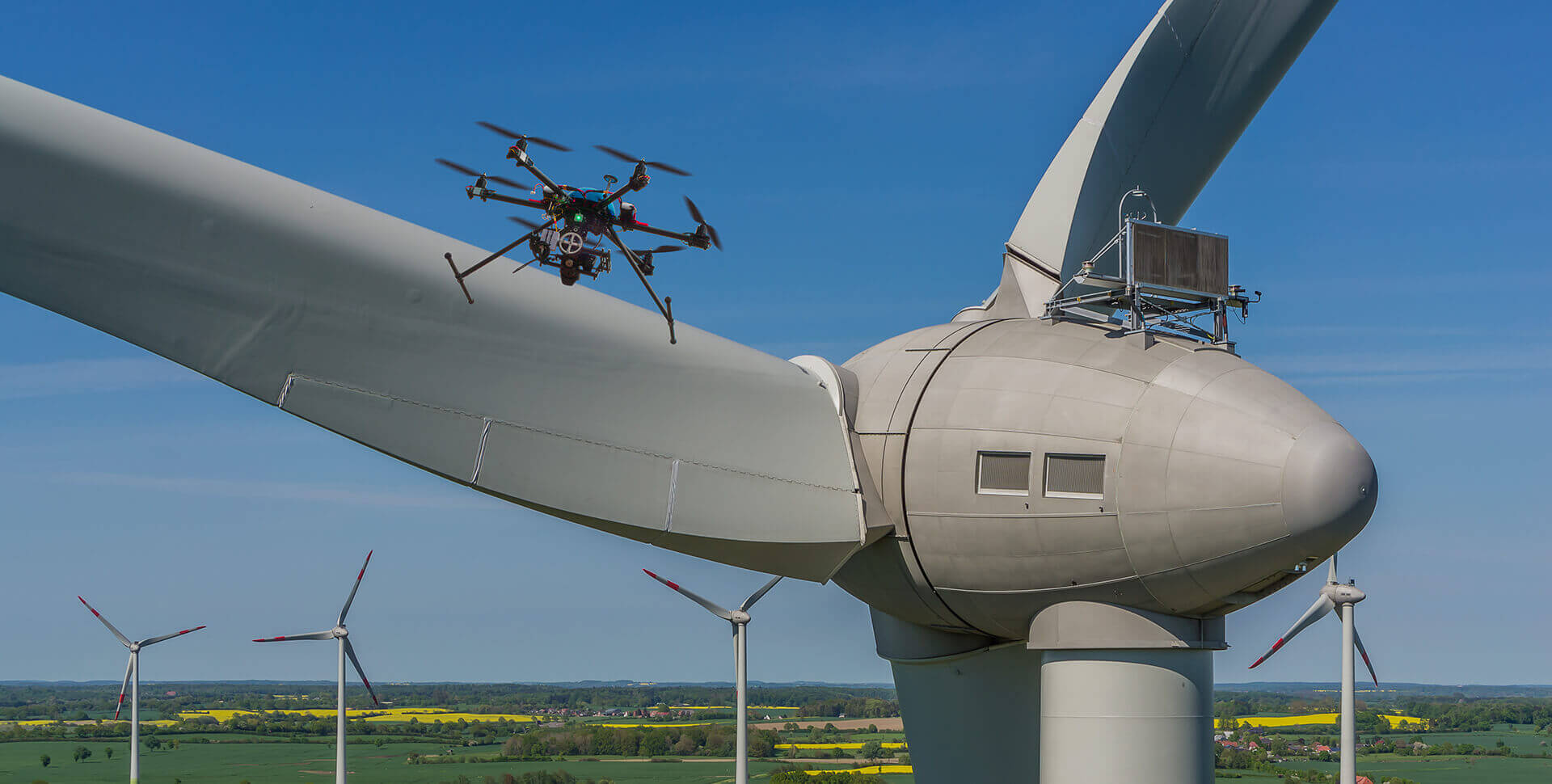
Optimize your UAV & Laser & Beauty system's performance with Huajing's advanced thermoelectric cooling technology.
Huajing Temperature Control – Your Professional Total Solution Provider for Temperature Control Equipment.


Looking for more
information?

0755 23405284
Email: sale02@hj-tc.com
Add: 3/F No.5 Building,Yesun Pingshan Life and Health Technology Park, No. 19 Linhui Road,Pingshan District, Shenzhen, Guangdong,CN.
©2019- 2024 Huajing Co.,Ltd.Copyright