Release time: April 13, 2026
Views: 532
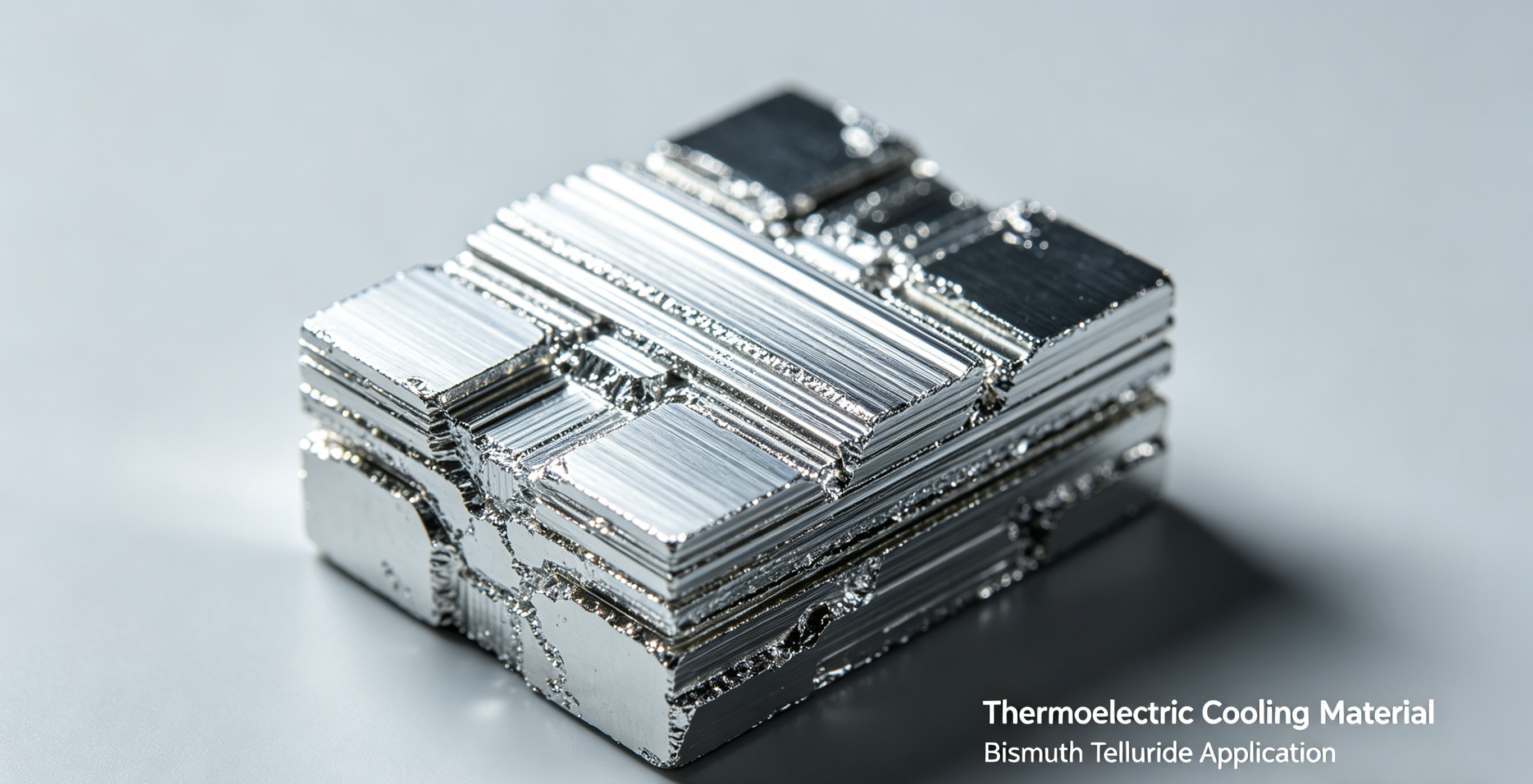
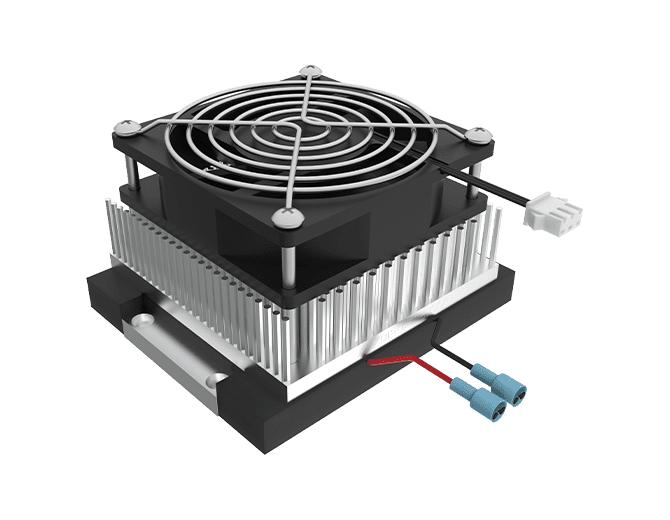
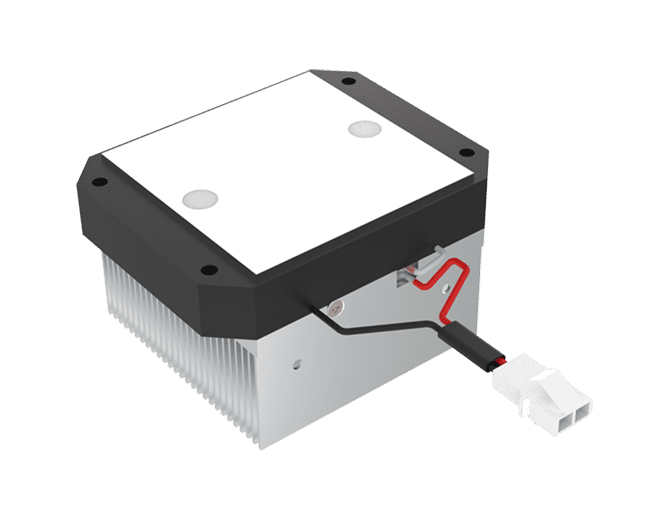
A thermoelectric cooler serves as an active cooling device for chips, yet it should only be regarded as an active heat transfer component of the entire cooling system. When an N-type semiconductor material and a P-type semiconductor material are connected to form an electrical couple, energy transfer occurs upon applying direct current to the circuit. The junction where current flows from the N-type element to the P-type element absorbs heat and acts as the cold side, while the junction where heat is released from the P-type element to the N-type element serves as the hot side. The magnitude of heat absorption and release is determined by the current intensity and the number of N-P semiconductor element pairs. The three key points below represent the thermoelectric effects of thermoelectric cooling.
1. Seebeck Effect
In 1822, Thomas Johann Seebeck, a German physicist, discovered that a thermoelectric electromotive force is generated in two connected dissimilar conductors when their two junctions are maintained at different temperatures.
Formula:
ES=S ⋅ ΔT
Where:
ES = thermoelectric electromotive force
S = Seebeck coefficient (thermoelectric power)
ΔT = temperature difference between the two junctions
2. Peltier Effect
In 1834, Jean Charles Athanase Peltier, a French physicist, discovered the reciprocal effect of the Seebeck effect: when an electric current passes through a junction formed by two dissimilar conductors, heat absorption or release takes place at the junction, with its magnitude dependent on the current.
Formula:
Qπ=π ⋅ I=α TcI
Where:
Qπ = heating or cooling power
π = Peltier coefficient (proportionality constant)
I = operating current
α = Seebeck coefficient
T c = temperature of the cold junction
3. Thomson Effect
When an electric current flows through a conductor with a temperature gradient, the conductor will absorb or release extra heat in addition to the Joule heat generated by its electrical resistance.
The heat absorbed or released between two points of the conductor with a temperature difference ΔT is calculated as:
Qτ =τI ⋅ ΔT
Where:
Qτ = heating or cooling power
τ = Thomson coefficient
I = operating current
ΔT = temperature gradient
It was not until the 1950s that Academician Fei Ye of the Institute of Semiconductors, USSR Academy of Sciences, conducted extensive research on semiconductors and published his findings in 1954. His research verified that bismuth telluride compound solid solutions exhibit excellent cooling performance. As the earliest and most important thermoelectric semiconductor material, bismuth telluride remains the primary component of semiconductor materials used in thermoelectric cooling today.
Following the practical application of Fei’s theories, numerous scholars studied the figure of merit (ZT) of thermoelectric cooling materials in the 1960s, achieving remarkable progress and enabling large-scale applications — which laid the foundation for today’s thermoelectric coolers in China.
China’s thermoelectric cooling technology originated in the late 1950s and early 1960s, making it one of the early research entities in this field worldwide. By the mid-1960s, the performance of domestic thermoelectric semiconductor materials had reached international standards. The period from the late 1960s to the early 1980s marked a major leap forward in the development of China’s thermoelectric coolingtechnology.
During this phase, the figure of merit of thermoelectric cooling materials was further improved, and their application fields were significantly expanded.
 Contact Our Thermal Experts:
📞 +86 18575222950 (WeChat/WhatApps)
📧 EMAIL: sale02@hj-tc.com
🌐 Browse products: https://www.huajingtc.com (Huajing Cooling Solutions)
Optimize your UAV & Laser & Beauty system's performance with Huajing's advanced thermoelectric cooling technology.


Looking for more
information?

0755 23405284
Email: sale02@hj-tc.com
Add: 3/F No.5 Building,Yesun Pingshan Life and Health Technology Park, No. 19 Linhui Road,Pingshan District, Shenzhen, Guangdong,CN.
©2019- 2024 Huajing Co.,Ltd.Copyright